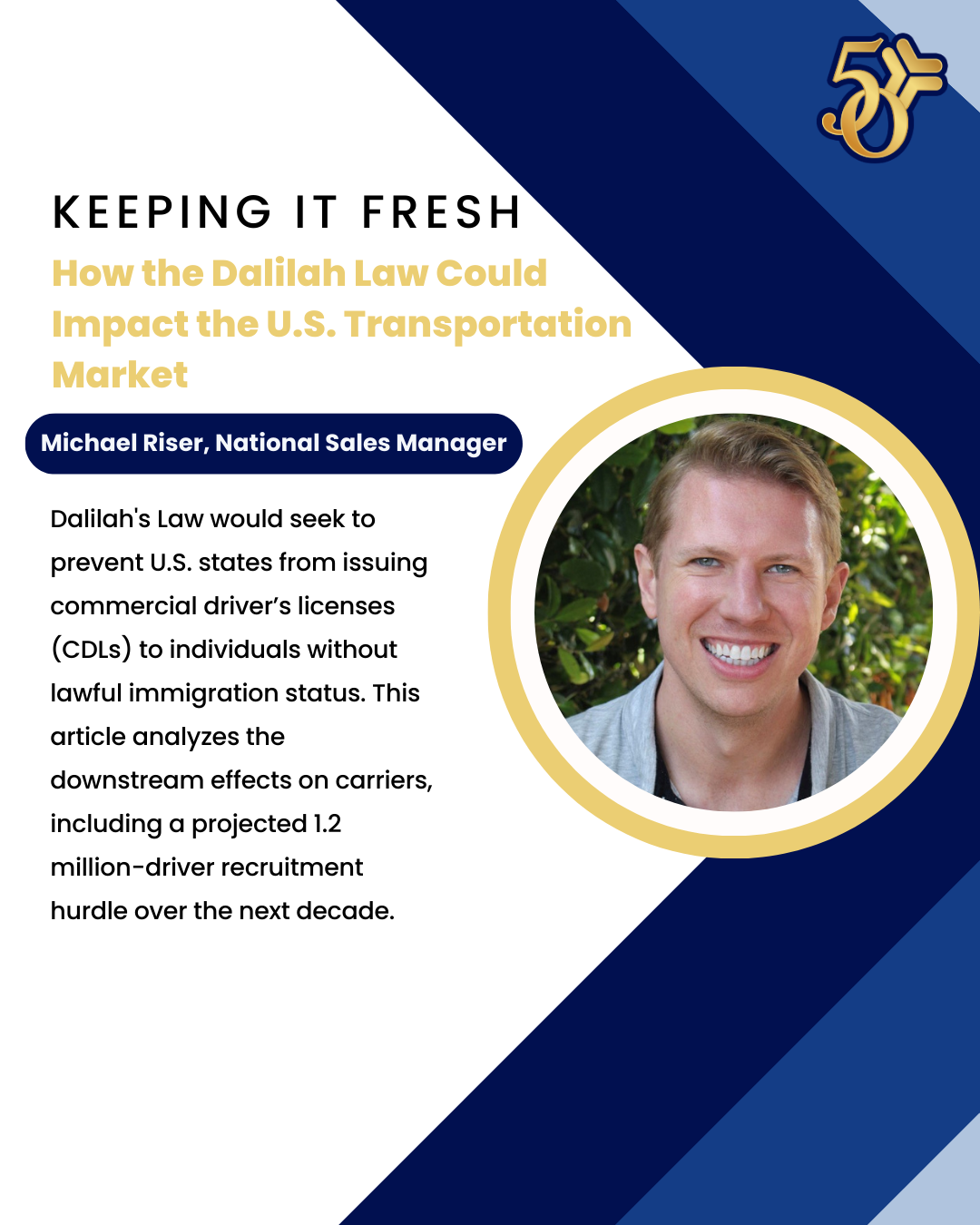
In June 2024, a five-year-old child, Dalilah Coleman, was injured in a traffic collision involving a semi-truck in Adelanto, California. The driver of the truck was reported to be an undocumented immigrant. During the annual State of the Union Address on February 24, 2026, President Trump referenced the incident and called on Congress to consider legislation referred to as the “Dalilah Law.” The proposed policy would seek to prevent U.S. states from issuing commercial driver’s licenses (CDLs) to individuals without lawful immigration status.
Following the address, Jim Banks (R-IN) introduced legislation in the U.S. Senate reflecting the proposal. According to industry reporting, if the bill were passed by Congress and signed by the president, it would take effect immediately upon enactment.
Key provisions described in coverage of the proposal include:
- Prohibiting states from issuing CDLs to undocumented immigrants or individuals with certain temporary or non-qualifying immigration statuses.
- Requiring states to revoke existing CDLs held by individuals who do not meet the new eligibility criteria.
- Implementing English-only requirements for CDL knowledge and skills testing.
- Mandating that all current CDL holders complete a recertification process within 180 days.
The U.S. trucking industry relies heavily on a vast network of commercial drivers to maintain freight movement across supply chains. Out of a total workforce of approximately 3.5-3.8 million CDL holders, FreightWaves estimates indicate that foreign-born drivers now comprise roughly 18-19% of the workforce, or approximately 630,000-720,000 individuals. This demographic shift is significant when viewed over time. According to Logistics Management, foreign-born drivers numbered just 316,000 in 2000. Despite that figure having doubled over the last two decades, the sector faces a structural driver shortage estimated at 80,000-100,000. To keep pace with demand, the industry is projected to require up to 1.2 million new drivers over the next decade, according to the same source.
The downstream effects could include increased costs as capacity tightens and pricing pressures rise. At the same time, trucking companies that remain unaffected by the proposed legislation may find themselves in a favorable position. With fewer competitors operating under the new constraints, demand for their services is likely to grow, giving them greater leverage to negotiate higher rates. This dynamic could ultimately shift bargaining power within the market, amplifying cost disparities across the supply chain.
If enacted, the proposed legislation could affect the supply of eligible commercial drivers in the U.S. truckload market, and changes to licensing eligibility and recertification requirements could result in some drivers being removed from the workforce. Ultimately, the scope of the impact from the proposed “Dalilah Law” would depend on several factors, including the final legislative language, implementation timelines, regulatory enforcement, and how our industry adapts over time.