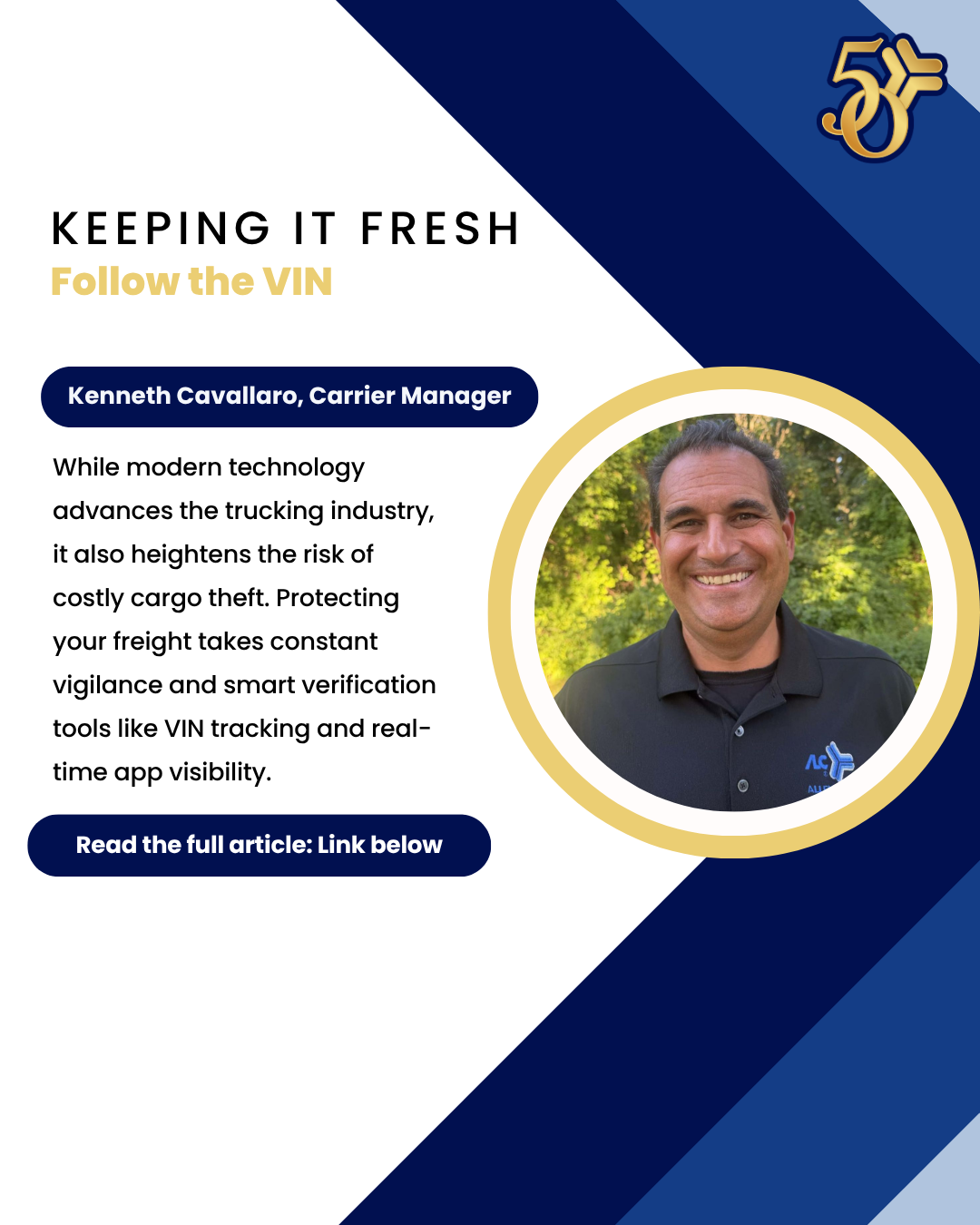
While the technology of our modern world has many advantages for the trucking industry, it also carries a significant financial risk of stolen loads. There is a very real threat of not knowing who is behind a computer screen when attempting to book a load. Verisk CargoNet reported almost $725 million in stolen cargo in 2025 alone, an alarming 60% increase from 2024. Food and beverages were the top target. Combatting this criminal threat to protect both ourselves and our customers must be a priority.
Verifying dispatcher or driver names and contact information was previously enough. Now, the burden has increased as technology has advanced. While technology opens the possibility of scammers, thankfully, it also can be utilized for protection. VIN numbers can be tracked on platforms such as Highway to eliminate the possibility of a fraudulent dispatcher. Much like a fingerprint, the VIN contains specific details about a vehicle’s origin, make, model, engine type, and production year. This code plays a vital role in vehicle identification, enabling access to essential information crucial to ownership, safety, and compliance.
Brokers can also utilize services like Carrier411 to identify a carrier attempting to book more freight than they have capacity for by comparing the truck count against the number of active loads. A final layer of protection is to verify the carrier on FMCSA to ensure the carrier has an active USDOT status and safety metrics. Once a truck is confirmed to be legitimate and in transit, tracking apps offer additional protection. Apps such as MacroPoint, FourKites, and even our very own ALC Carrier app let the customer see where a driver is in real time. Having that information offers peace of mind until a load is safely delivered.
The American Transportation Research Institute believes cargo theft costs the industry more than $18 million per day. If the Senate passes the Combating Organized Retail Crime Act (CORCA), our industry will benefit from a law-enforcement task force charged with pursuing these criminal rings. This would create a division within Homeland Security that could help our industry for the better. Until this becomes a reality, we must remain vigilant in verifying drivers and dispatchers to stop criminals and prevent costly cargo theft.